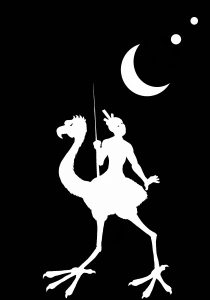
“The Last Great Taniwha King”
Probably the oldest, longest surviving Taniwha was Wai-makariri – who was known as Old Waimakariri (“King” or “Kīngi” was a late moniker, but indicated his status – even among Māori).
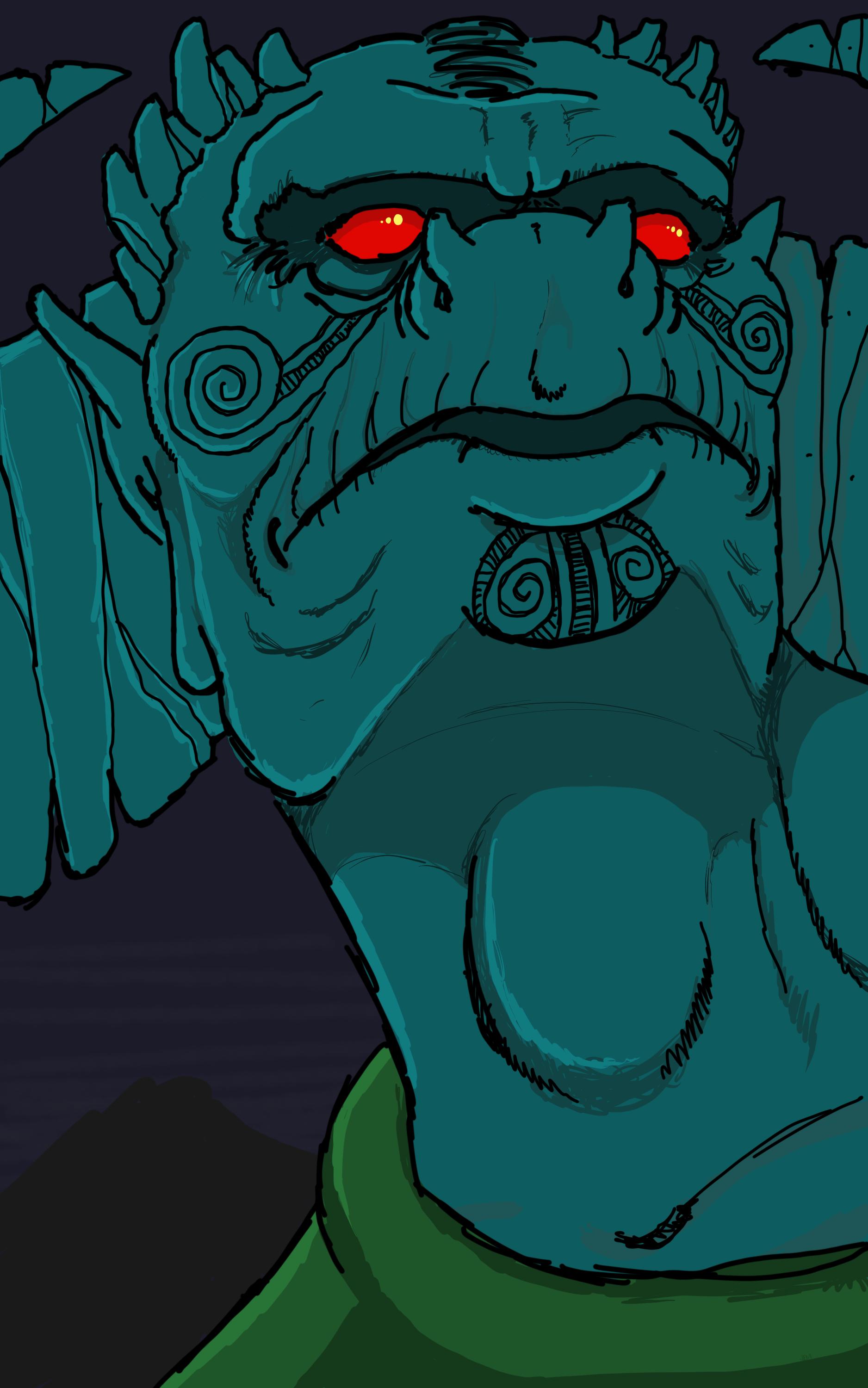
In his time among the gods, he was a powerful but gentle Watcher, but he did find fault with the cavalier attitude of his more-omnipotent peers. Though his quest for power did influence his physical nature (becoming Taniwha), he was among a few magical practitioners who did not spill blood for the cause. His action for non-violent revolution was unique, but afforded him no favours when the gods demanded retribution against the Watchers.
He was among the many Taniwha who now fled to safer lands and escape punishment.
No doubt, Wai-makariri was one of the first voyagers to set foot on Te Ika-A-Maui (the North Island of New Zealand) and was rumoured to have visited Tāne-Mahuta – paying respect and offering peace to the mighty god of the forest. He later traveled south with his beloved wife, Puaka-iti, where he mastered earth and fire magic.
When the Aho discovered that the remote islands of the Pacific now held the last Taniwha, they landed ashore and continued to wage their war against them (“The Taniwha Wars”). Wai-makariri, his wife and a handful of faithful adherents offered peaceful terms of surrender, and vowed to remain neutral. The offer was begrudgingly accepted, and Wai-makariri and his followers retreated to the remote Far North.
As years passed and the conflict increased, a new people arrived – the Māori – who discovered vast largely unpopulated lands to settle. Wai-makariri and his followers tolerated the new arrivals, but were always suspicious of their customs. Even though there was mutual benefits to living together, Wai-makariri remained distant, only becoming involved in small isolated ventures with the Māori people.
When the Taniwha War teetered in favour of the Taniwha, the Aho – who had befriended and encouraged the growth of the new tangata whenua (indigenous people) – asked the Māori to help them turn the tide of war.
Knowing they were no match for the sheer number of Māori warriors drawn into battle, the Taniwha waged a new terrible war against them – all except Wai-makariri, who remained true to his word. But since his terms of peace died with the Aho, the Māori unwittingly took up arms against Wai-makariri.
The betrayal hurt Wai-makariri deeply.
The first to fall was Puaka-iti, Wai-makariri’s wife and, unknown to all at the time, the last female Taniwha. Her death sparked a terrible vengeance in Wai-makariri, who turned his violent wraith against the Māori.
His unrelenting fury caused horrific destruction, but by this time, the Taniwha were reduced in number. Knowing that their extinction was at hand, Wai-makariri used magic to influence and unite to last remaining Taniwha, and combined dark powers to raise a new Queen from the earth, with whom to continue their bloodline.
But with Māori slowly encroaching the land around them, he turned his attention once more against the new inhabitants.
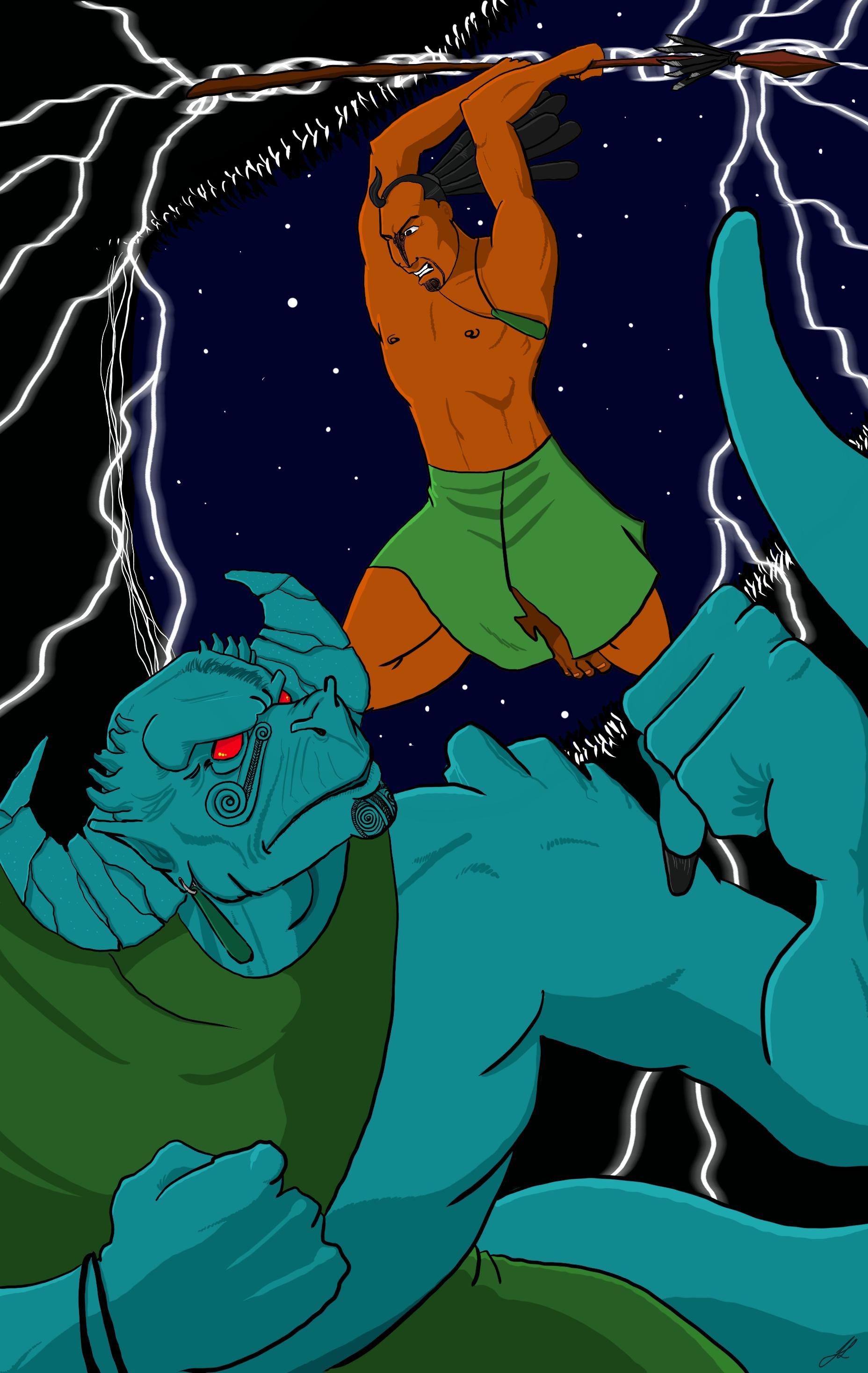
This last strike was known as “Te Putakari O Nga Hamutia” and proved fatal for Wai-makariri and most of his followers. He was felled by Werahiko Hamiora at the battle, breaking the magical spell that held sway over the other Taniwha. Though the last Taniwha fulfilled his desire in creating a new Queen, they would never witness another powerful and wisened leader like Wai-makariri.
 Māori Magic and Mythology
You must be logged in to post a comment.